


Ear piercing for infants is a big decision. It needs careful thought to avoid problems.
Rowan’s medical ear piercing is designed to be fun and pain-free. It’s meant to be a celebration for the whole family. Making sure it’s done safely is key to avoid any bad outcomes.
If you’re thinking about ear piercing for your baby, know the risks and benefits. For advice and to talk about your worries, call a professional at 07415 278022.
Key Takeaways
- Ensure the ear piercing is done in a sterile environment.
- Choose a reputable and experienced practitioner.
- Follow proper aftercare instructions to prevent infection.
- Be aware of the possible risks and benefits.
- Consult a professional for personalised advice.
What Is Baby Piercing and Why Do Parents Consider It?
Parents often choose to pierce their baby’s ears for cultural, historical, and personal reasons. This decision is not made lightly. It involves thinking about cultural importance and health risks.
Cultural and Historical Significance of Infant Ear Piercing
In many cultures, piercing a baby’s ears is a long-standing tradition. It marks cultural identity, spiritual growth, or social status. For example, in some African and Asian cultures, it’s seen as a rite of passage. It’s believed to protect against evil spirits or mark a child’s coming of age.
This cultural importance is a big reason for many parents to consider ear piercing for their babies.
Medical Perspectives on the Practice
The American Academy of Pediatrics (AAP) doesn’t give clear guidelines on ear piercing in children. This leaves the decision up to parents. But, paediatricians do offer advice on the risks and benefits.
They talk about the chance of infection and the need for good aftercare. It’s important for parents to understand these medical views to make a well-informed choice.
| Cultural Practice | Significance | Age of Piercing |
|---|---|---|
| African Ear Piercing | Spiritual Significance | Infancy |
| Asian Ear Piercing | Cultural Identity | Early Childhood |
At What Age Is Baby Piercing Considered Safe?
Deciding to pierce a baby’s ears is a big choice. Parents often ask when it’s safe to do so. The American Academy of Pediatrics (AAP) advises waiting until the child can care for the piercings themselves. But, the best age for baby ear piercing depends on the child’s health and development.
Paediatrician Recommendations on Timing
Some doctors say wait until the baby is at least three months old. This is because their immune system is stronger and the risk of problems is lower. A study in the Journal of Pediatrics found that babies under three months are more likely to get infections because their immune systems are not fully developed.
“It’s essential for parents to consider their child’s individual development and health status before making a decision about ear piercing.”
Developmental Milestones to Consider Before Piercing
Before piercing a baby’s ears, think about their developmental milestones. If the baby can talk and understand basic hygiene, they might be ready. Here are some important milestones to look at:
| Age | Developmental Milestones |
|---|---|
| 0-3 months | Basic reflexes, beginning to discover hands and feet |
| 3-6 months | Improved immune system, starting to understand cause-and-effect |
| 6 months+ | Better communication skills, more aware of surroundings |
Choosing the right time for baby ear piercing should involve talking to a paediatrician. They will consider the child’s health and development.
What Are the Potential Risks of Baby Piercing?
Baby piercing can be a big statement, but parents need to know the risks.
Ear piercing in babies has risks like pain and allergic reactions. Infections and earring backings getting stuck are also possible.
Common Complications Parents Should Be Aware Of
Infection is a big risk with baby ear piercing. It happens if the tools aren’t clean or if aftercare isn’t followed.
Allergic reactions to metals are another risk. Some earrings have nickel or other allergens that can irritate the skin.
| Complication | Description | Prevention |
|---|---|---|
| Infection | Bacterial infection causing redness, swelling, and discharge. | Proper aftercare, sterile equipment. |
| Allergic Reaction | Reaction to metals like nickel causing irritation. | Use hypoallergenic earrings. |
Warning Signs of Infection and When to Call Your GP
Watch for signs of infection like redness, swelling, or discharge. Increased pain is also a warning sign.
If you see these signs, call your GP. Early action can stop bigger problems.
In conclusion, baby piercing is safe if done right. Knowing the risks and how to avoid them is key for the baby’s health.
How to Choose a Qualified Professional for Baby Piercing
Choosing the right professional for baby piercing is key for a safe and successful experience. Parents should be thorough in their search. This ensures the best outcome for their child.
Essential Qualifications and Certifications to Look For
A qualified professional for baby piercing must have the right certifications and follow strict hygiene standards. Look for piercers certified by reputable organizations like the Piercing and Tattooing Council or similar bodies in the UK. They should have experience with infant piercings and follow proper sanitation procedures.
| Qualification/Certification | Description |
|---|---|
| Piercing and Tattooing Council Certification | Ensures the piercer meets industry standards for hygiene and technique. |
| First Aid Training | Indicates the piercer is prepared to handle any medical emergencies. |
Questions to Ask Before Booking
Before booking, ask the right questions. Find out their experience with baby piercings, the equipment they use, and their aftercare advice. For more guidance or to book a consultation, call our dedicated line at 07415 278022.
Which Baby Piercing Method Is Safest?
The safety of baby ear piercing depends on the method and equipment. Healthcare providers use sterilized needles and hypoallergenic earrings. They stress the need for proper equipment and hygiene.
Comparing Piercing Guns vs. Professional Needle Techniques
Piercing guns are not the safest for baby ear piercing. Professional needle techniques are more precise and controlled. Professional needle techniques minimize the risk of trauma to the ear and are recommended for infant ear piercing.
A comparison of the two methods is outlined in the table below:
| Method | Safety Features | Risks |
|---|---|---|
| Piercing Guns | Quick procedure | Higher risk of trauma, less precise |
| Professional Needle Techniques | Precise, controlled, sterile equipment | Lower risk of complications when done by a professional |
Sterilisation Standards in the UK
The UK has strict sterilisation standards for piercing equipment. Sterilisation is key to prevent infections. Reputable piercing studios and healthcare providers use single-use, sterile needles and follow proper hygiene.
Parents should check if the piercing studio or healthcare provider follows these guidelines. This helps to reduce the risk of complications.
What Types of Jewellery Are Appropriate for Newly Pierced Baby Ears?
Choosing the right jewellery for newly pierced baby ears is key for their comfort and safety. The jewellery should be made from hypoallergenic materials and have safety features. This helps avoid any complications.
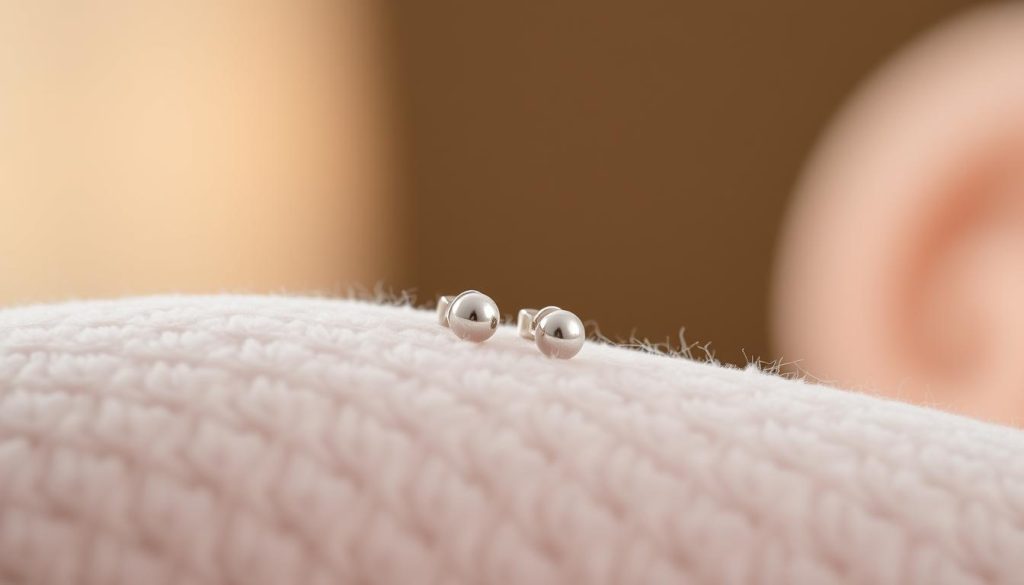
Hypoallergenic Materials for Sensitive Infant Skin
For baby ears, it’s important to pick earrings that are hypoallergenic. Surgical steel and 14-karat gold are good choices because they have low nickel. This makes them safe for sensitive skin.
These materials are less likely to cause irritation. This helps the healing process go smoothly.
Size, Weight and Safety Features to Consider
When picking earrings for your baby, think about size, weight, and safety. Choose earrings with a smooth finish and no sharp edges. This prevents irritation.
The earrings should be light to avoid putting too much pressure on the piercing. Also, look for earrings with secure backs. This stops them from coming loose and being a choking hazard.
By picking the right jewellery and following aftercare, your baby’s ear piercing can heal safely and comfortably.
How Should You Prepare Your Baby for a Piercing Appointment?
Getting your baby ready for a piercing can seem tough. But, with the right steps, it can be easy. Try to book the piercing when your baby is happy and awake. A well-rested and fed baby will likely stay calm during the piercing.
Essential Items to Bring Along
It’s important to be ready when taking your baby for a piercing. Here are some key things to bring:
- A pacifier or comfort item to help soothe your baby
- A favourite toy or blanket to provide reassurance
- Any necessary medical information or insurance details
- A list of questions or concerns to discuss with the practitioner
Having these items ready can make the experience less stressful for you and your baby.
Techniques for Keeping Your Baby Calm and Comfortable
It’s key to keep your baby calm during the piercing. Here are some ways to do it:
- Using calming techniques such as gentle rocking or swaddling
- Maintaining a calm and soothing atmosphere during the appointment
- Having a trusted caregiver present to provide additional support
By using these methods, you can help reduce your baby’s discomfort. This ensures a successful piercing experience.
What Does Proper Aftercare for Baby Piercing Involve?
Aftercare for baby piercings is key to avoid problems and help healing. It keeps the piercing clean and infection-free. This lets the baby heal fast and feel better.
Step-by-Step Cleaning Instructions for New Parents
Parents need to follow a simple cleaning routine. First, wash your hands thoroughly with soap and water before touching the earrings or the piercing site. Then, gently clean the area around the piercing with a saline solution or mild soap and water. Use a clean cotton ball or swab to wipe away any crust or debris.
- Soak a cotton ball in saline solution.
- Gently wipe the piercing site, removing any crust or discharge.
- Rinse with clean water to remove any soap residue.
- Dry the area with a clean towel.
Managing Discomfort and Preventing Complications
It’s important to manage discomfort and prevent complications. If the baby seems uncomfortable or irritated, check the earrings for any signs of tightness or allergic reactions. Make sure the earrings are hypoallergenic to avoid allergic reactions.
- Watch for signs of infection, like redness, swelling, or discharge.
- Avoid changing or removing the earrings until the piercing is fully healed.
- Keep the baby’s hair away from the piercing site to prevent irritation.
By following these steps and watching the baby’s comfort, parents can lower the risk of problems. This ensures a smooth healing process.
Are There Common Myths About Baby Piercing?
Many parents are unsure about piercing a baby’s ears. They worry about safety, pain, and aftercare.
Debunking Misconceptions About Pain and Healing
Some think piercing a baby’s ears is very painful. But, the pain is usually small and short-lived. Professional piercers use clean tools and methods to lessen discomfort. Some believe early piercing can make later piercings less painful.
Evidence-Based Facts Every Parent Should Know
Parents need to know the truth about baby piercing. For example, hypoallergenic jewellery lowers allergy risks. Also, keeping the pierced area clean is key to avoiding infections. Use saline solution for cleaning and avoid harsh chemicals.
Knowing the facts helps parents make better choices for their baby’s piercing. It’s wise to talk to a healthcare expert or a professional piercer about any worries.
Can Babies Benefit from Acupuncture Piercing?
Babies can gain from acupuncture piercing, a special kind of piercing. It’s not just for looks like regular piercing. It’s meant to help their health and well-being.
Understanding the Difference Between Cosmetic and Therapeutic Piercing
Cosmetic piercing is for looks, making holes for jewellery. But, therapeutic piercing, like acupuncture, is for health. It uses fine needles to help the body heal itself. Acupuncture for babies is safe if done by a skilled person.
Age-Appropriate Alternative Wellness Approaches
Choosing wellness methods for babies needs careful thought. Some parents try acupuncture or piercing for their baby’s health. Other options include soft massage, herbal treatments (with careful advice), and homeopathy.
It’s key for parents to talk to doctors before trying any new wellness methods.
| Wellness Approach | Age Appropriateness | Benefits |
|---|---|---|
| Acupuncture Piercing | Should be considered with caution and under professional guidance | Potential for promoting natural healing and relaxation |
| Gentle Massage | Suitable from birth | Promotes relaxation and bonding |
| Herbal Remedies | Requires strict guidance from a healthcare professional | Can offer natural relief for certain conditions |
Why Is Daith Migraine Piercing Not Suitable for Babies?
Daith piercing for migraine relief is not good for babies. It involves piercing the inner ear rim, a method for adults with migraines. But, it’s not right for babies for several reasons.
Anatomical Considerations and Age Restrictions
Babies’ ears are growing, and their cartilage is softer and more delicate. The Daith area, part of the ear’s cartilage, is not fully formed in infants. This makes it a bad spot for piercing. Also, the needed precision and care for infants are hard to achieve.
Safe Alternatives for Infant Health Concerns
If you’re worried about your baby’s health, there are safer options than Daith piercing. First, talk to a paediatrician about any health issues. They can suggest safe treatments based on your baby’s needs.
For example, if your baby is in pain, a paediatrician can recommend the right pain relief. They’ll consider what’s best for your baby.
| Health Concern | Safe Alternatives |
|---|---|
| Migraine-like symptoms | Consult a paediatrician for diagnosis and treatment |
| Ear pain or discomfort | Paediatrician-recommended ear drops or pain relief medication |
Parents should always choose evidence-based medical practices for their baby’s health. While Daith piercing might seem like a good idea, it’s important to talk to doctors first.
What Should You Do If Complications Arise After Baby Piercing?
If your baby has problems after piercing, it’s key to spot and fix them fast. Issues can be allergic reactions, infections, or earrings getting stuck, among others.
Identifying Allergic Reactions and Infections
Allergic reactions to earrings can make the pierced area red, swollen, and itchy. Infections happen if the piercing isn’t cleaned right. Look out for more redness, swelling, discharge, or a bad smell. If you see these signs, act quickly.
Common signs of allergic reactions and infections:
- Redness and swelling around the pierced area
- Discharge or crust formation
- Increased sensitivity or pain
- Foul odour from the piercing site
Professional Help for Embedded Earrings and Other Complications
If you think your baby’s earring is stuck, get help from a pro. Trying to take it out yourself can make things worse. For expert advice, call our consultation line at 07415 278022.
| Complication | Signs and Symptoms | Action to Take |
|---|---|---|
| Allergic Reaction | Redness, swelling, irritation | Consult a healthcare professional |
| Infection | Increased redness, swelling, discharge, foul odour | Seek medical attention |
| Embedded Earring | Earring becomes embedded in the skin | Contact a professional piercer or healthcare provider |
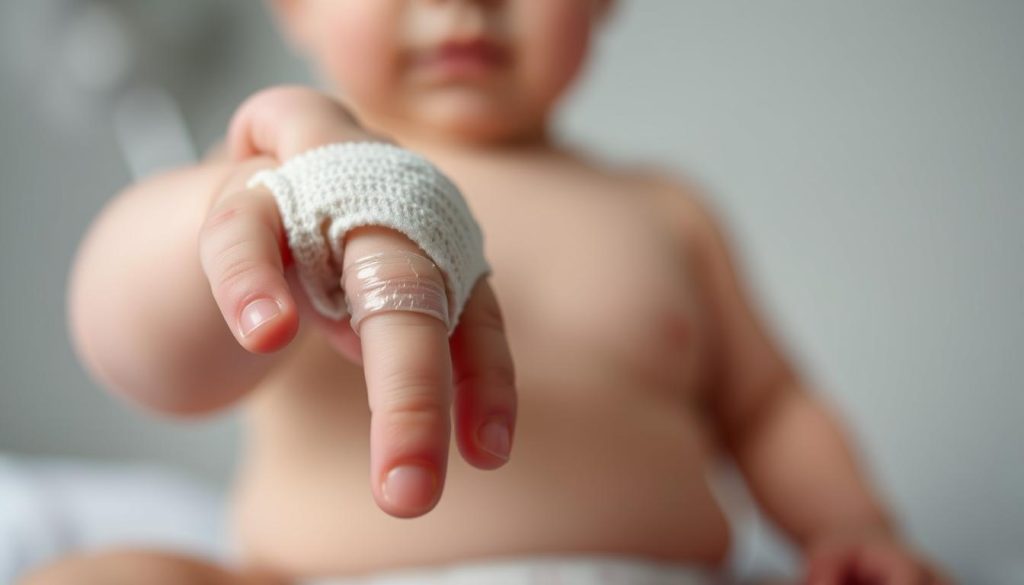
How Do Ear Piercing Needles Contribute to Safe Baby Piercing?
Ear piercing needles are key in the baby piercing process. They provide a precise and safe way to pierce. This method causes little harm to the baby’s ear, lowering the chance of problems.
Professional Equipment Standards for Infant Piercing
Professional piercers use ear piercing needles made just for babies. These needles are made to high standards, ensuring they are clean and safe. Using such specialised equipment helps avoid infections and other issues.
In the UK, the rules say needles must be used once and thrown away after each piercing. This stops infections from spreading.
The Importance of Single-Use Sterile Tools
Using single-use sterile tools is vital to stop infections. Sterile ear piercing needles are used once and then thrown away. This greatly lowers the risk of passing on germs.
This approach follows UK health rules. It stresses the need for a clean environment during piercing.
Should You Consider Wellness Retreats for Baby Piercing Services?
Wellness retreats are an interesting option for parents looking for a calm place for their baby’s piercing. They offer a mix of piercing services and a relaxing setting. This can help make the experience less stressful for everyone involved.
Evaluating Specialised Piercing Environments for Infants
When thinking about wellness retreats for baby piercing, it’s important to check their piercing environments. Look for places with high hygiene standards and skilled practitioners. Make sure they use clean equipment and hypoallergenic jewellery.
The setting should be peaceful and comfy. This can help reduce the stress of the piercing process.
| Aspect to Evaluate | What to Look For |
|---|---|
| Hyiene Standards | Use of sterile equipment, proper sanitation procedures |
| Practitioner Experience | Qualifications, experience with infant piercings |
| Jewellery Quality | Hypoallergenic materials, appropriate sizing for infants |
Questions to Ask Before Booking a Wellness Retreat Service
Before booking a wellness retreat for baby piercing, ask important questions. Find out about the practitioner’s qualifications, the jewellery used, and aftercare support. It’s also key to ask about their infection control policies and how they handle complications.
- What are the qualifications of the piercing practitioner?
- What type of jewellery is used, and is it hypoallergenic?
- What aftercare instructions and support are provided?
- What are the retreat’s policies on infection control?
By asking these questions, parents can make a better choice for their baby’s piercing.

What Are the Benefits of Having a Pediatrician Perform the Piercing?
Choosing a pediatrician for your baby’s ear piercing can be a big relief for parents. It’s because pediatricians are experts in medical care. They know how to keep your baby safe during the piercing.
One key benefit is the lower chance of problems. Pediatricians are skilled in doing piercings on babies. They know how to avoid infections and other issues.
Advantages of a Medical Professional Performing the Piercing
Having a pediatrician do the piercing has many pluses. They check your baby’s health first. This makes sure your baby is ready for the piercing.
They also know how to deal with any issues that might come up. Their training helps them spot problems early. This means they can act fast to help your baby.
Reduced Risk of Complications with a Qualified Professional
Having a doctor do the piercing means fewer risks for your baby. Pediatricians use clean tools and the right methods. This cuts down the chance of infection.
They also teach you how to care for your baby’s ears after the piercing. This helps prevent any problems later on.
Conclusion: Making an Informed Decision About Your Baby’s Piercing
Parents thinking about baby piercing need to look at the good and bad sides. Knowing the safest age, possible problems, and how to care for it helps make a smart choice. This way, parents can decide wisely about their baby’s piercing.
Choosing a skilled piercer and hypoallergenic jewellery can lower the risk of issues. It’s key to know the signs of infection and act fast if needed. With the right care, baby piercing can be safe and good for your child.
The choice to pierce your baby’s ears should be well thought out. Knowing all about it and its effects helps make sure your baby has a good experience.
FAQ
What is the recommended age for baby ear piercing?
What are the possible risks of baby ear piercing?
How do I choose a qualified professional for baby ear piercing?
What is the difference between piercing guns and professional needle techniques?
What types of jewellery are suitable for newly pierced baby ears?
How can I prepare my baby for a piercing appointment?
What does proper aftercare for baby piercing involve?
Can babies benefit from acupuncture piercing?
Why is daith migraine piercing not suitable for babies?
What should I do if complications arise after baby piercing?
How do ear piercing needles contribute to safe baby piercing?
Should I consider wellness retreats for baby piercing services?
What are the benefits of having a pediatrician perform the piercing?
Author Info

SEO Manager
No Comments